
Fear of Causing an Accident While Driving: When It's Harm OCD
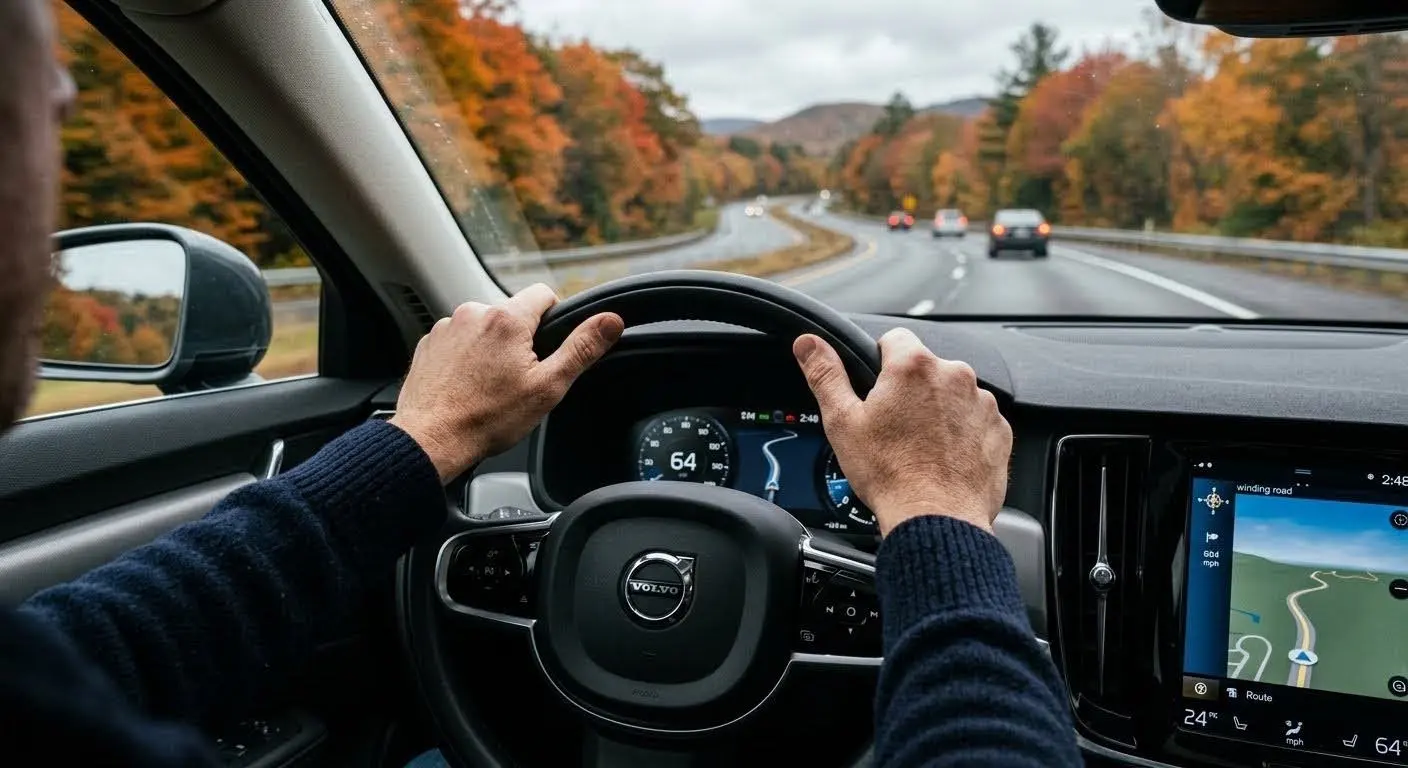
For a lot of people, driving anxiety isn't really about the road. It's about responsibility. Specifically, the fear of being the person who causes an accident, hurts someone, and doesn't even realize it happened. In this guide from Behavioral Health Direct, a private therapy practice in Baltimore, Maryland specializing in anxiety and OCD, you'll learn how this fear connects to Harm OCD and what treatment actually looks like.
If that sounds familiar, and it comes with a compulsion to check, retrace, or confess, it may not be ordinary nervousness behind the wheel. It could be Harm OCD.
What this fear actually looks like
Harm OCD tied to driving usually shows up as an intrusive thought: what if I hit something back there and didn't notice? The thought itself isn't unusual. Most drivers have a passing "what was that bump" moment now and then. The difference with Harm OCD is what happens next.
- Circling back to check the road for anything you might have hit
- Replaying the last few minutes of a drive in detail, over and over
- Scanning the news or local reports for accidents that might match your route
- Asking a passenger to confirm nothing happened
- Avoiding driving certain roads, or driving at all, to rule out the possibility entirely
Each of these brings a few seconds of relief, then the doubt creeps back in. That's the OCD cycle: the checking doesn't resolve the uncertainty, it just teaches your brain that the uncertainty was dangerous enough to need checking.
Why checking makes it worse, not better
It feels logical to check. If there's a real chance you hit something, checking would be responsible. The problem is that Harm OCD isn't actually about risk assessment. It's about needing 100% certainty that you did nothing wrong, and that kind of certainty doesn't exist for anyone, OCD or not.
Every time you check and find nothing, your brain doesn't file that away as "confirmed safe." It files it as "checking worked, do that again next time." The compulsion gets reinforced instead of the anxiety getting resolved.
People with OCD often struggle to trust their memory, not because their memory is actually unreliable, but because they can't reach absolute certainty about what they remember. This fits a broader theme in OCD generally: a hard time tolerating uncertainty of any kind, not just memory. This pattern is sometimes referred to as false memory OCD, where someone fixates on an ambiguous moment, replays it, and still can't land on certainty, because certainty was never really available in the first place.
The truth is, none of us are paying full attention all the time. Driving down a familiar road, most people's minds wander, at least a little, and that's normal. It means there's always some gap between what actually happened and what got consciously registered. Most people brush past that gap without a second thought. For someone with OCD, that same ordinary gap can become the thing they get stuck on, replaying it and searching it for a certainty it was never going to contain.
How treatment addresses it
Effective treatment for this kind of Harm OCD combines a few evidence-based approaches:
CBT helps you identify the specific thought errors driving the fear, like the leap from "I had a thought about hitting something" to "something must have happened." Inference-based CBT in particular targets that exact reasoning gap.
ERP (Exposure and Response Prevention) is the core of treatment. You practice driving familiar routes without checking, circling back, or asking for reassurance, and you sit with the discomfort of not knowing for certain. Over time, your brain learns that the uncertainty was never actually dangerous.
ACT builds your capacity to notice the intrusive thought without needing to resolve it before you can keep driving toward what matters to you.
When to reach out
If checking or replaying a drive is eating up real time, or you're avoiding driving to sidestep the fear entirely, that's a sign it's worth talking to someone who treats OCD specifically. This pattern responds well to treatment, and you don't have to keep managing it on your own.
This is one piece of a broader picture. If avoidance, panic, or restricted routes are also part of what you're dealing with, our driving anxiety therapy page covers the full picture of symptoms and treatment. And if intrusive harm-related thoughts show up outside of driving too, our Harm OCD therapy page goes deeper into that pattern specifically.
Talk to an OCD specialist in Maryland
Choose a convenient time below. You'll have the option to meet in person at our Baltimore office in Mount Washington, or request an online appointment anywhere in Maryland.
(443) 296-2584 · info@behavioralhealthdirect.com · 1501 Sulgrave Ave., Suite 206, Baltimore, MD 21209