
Therapy for False Memory OCD in Baltimore, MD
Stop replaying the past looking for certainty that was never there, and feel confident trusting your own memory again with evidence-based therapy.
Signs you might be dealing with false memory OCD
False memory OCD isn't about actually forgetting things or getting facts wrong. It's about not being able to trust your memory, even when there's no real reason to doubt it.
Replaying moments on a loop
Going over and over a conversation, an interaction, or an ordinary moment trying to pin down exactly what happened.
Doubting clear memories
Feeling unable to trust what you remember, even when nothing about it was ever actually unclear.
Seeking reassurance
Asking others to confirm what happened, how you reacted, or what you were thinking in the moment.
Avoiding triggering situations
Steering clear of conversations, images, or interactions that could set off the doubt in the first place.
People with OCD often struggle to trust their memory, not because their memory is actually unreliable, but because they can't reach absolute certainty about what they remember. This fits a broader theme in OCD generally: a hard time tolerating uncertainty of any kind, not just memory.
None of us are paying full attention all the time. There's always some gap between what actually happened and what got consciously registered, and most people brush past that gap without a second thought. For someone with false memory OCD, that same ordinary gap becomes the thing they get stuck on, replayed and searched for a certainty it was never going to contain. Our post on the fear of causing an accident while driving walks through exactly how this plays out with Harm OCD.
Evidence-based, flexible treatment
Our collaborative and flexible approach to treatment makes sure you receive the best research backed therapy for false memory OCD.
Cognitive Behavioral Therapy
Helps you catch the specific thought patterns driving the doubt, like treating an unclear memory as proof that something went wrong.
Exposure & Response Prevention
Practices sitting with an unresolved memory on purpose, without checking, replaying, or seeking reassurance to force certainty.
Acceptance & Commitment Therapy
Builds tolerance for uncertainty itself, so an unclear memory no longer has to be resolved before you can move on with your day.
Inference-Based CBT
Targets the reasoning errors behind the doubt, like the leap from "I can't perfectly recall this" to "something must have happened."
Effective OCD therapy
"I came to him with issues related to OCD and anxiety. Dr. Schwartz was very understanding and helped me work through some very distressing thought patterns. Sharing was very easy and I never felt any type of judgement or shame."
Michael D. — Catonsville, MD
"As a fellow therapist, I recently consulted with Yisrael regarding a complex OCD case and found him to be incredibly knowledgeable, thoughtful, and generous with his expertise. What stood out most was his unique ability to be both deeply clinically insightful and genuinely supportive."
Jennifer G., LCSW — Professional Colleague
"Yisrael's compassion, understanding, and expertise were evident from the very beginning. His deep knowledge of anxiety management techniques and his ability to tailor them to my specific needs truly made a difference in my life."
Edwin Z. — Baltimore, MD
Common questions about false memory OCD
Is false memory OCD a real, diagnosable condition?
Not as its own diagnosis, no. False memory OCD is a subtype of OCD, and we treat it the same way, with evidence-based approaches like ERP. It can feel unique to your situation, but it's a well-understood, treatable pattern.
Why can't I just trust my memory once I've checked it?
Because checking doesn't actually make a memory clearer, it just makes it feel less certain each time you go back to it. Research on OCD and checking behavior consistently finds that repeated checking reduces confidence and vividness in a memory without changing its accuracy. That's why checking again never feels like enough.
Is this different from just having a bad memory?
Yes. People with false memory OCD generally have memory accuracy in line with everyone else. What's different isn't the memory itself, it's the inability to tolerate any uncertainty about it. Most people brush past small gaps in memory without a second thought. With OCD, that same ordinary gap becomes something the mind can't let go of.
How long does treatment typically take?
It varies by person, but many clients notice meaningful change within 8–16 weekly sessions using ERP. We'll build a plan around your specific triggers rather than a fixed timeline.
Do you accept insurance?
We're private-pay and out-of-network. That's what lets us keep caseloads small and stay responsive to the people we're working with. Many clients use their out-of-network benefits to offset the cost, and we'll help you check yours.
Straightforward, private-pay pricing
- Standard session (45 min) $225
- Initial appointment (60 min) $300
Many clients use out-of-network insurance benefits to offset the cost. We'll help you check yours before you commit to anything.
In-person in Baltimore, virtual throughout Maryland
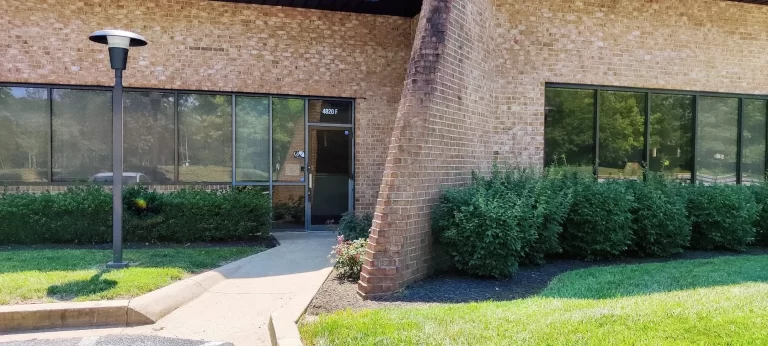
In-person Baltimore office
Our in-person office is located in the Mount Washington neighborhood at 1501 Sulgrave Ave., Suite 206, Baltimore, MD 21209. A convenient and quick drive from most areas in Baltimore City and County.
(443) 296-2584
Virtual therapy across Maryland
We offer secure teletherapy anywhere in Maryland. Many clients choose virtual sessions for the flexibility.
Get started with therapy for false memory OCD
Choose a convenient time for your consultation with an OCD specialist. Book a free 15-minute consultation to talk through what you're experiencing and whether treatment is the right fit.