
Therapy for Health Anxiety in Baltimore, MD
You're tired of constantly worrying about your health, scheduling appointments, and feeling anxious every time something feels off. Our evidence-based treatment for health anxiety helps you calm down and feel better, without searching for unattainable certainty.
What health anxiety can look like
A racing heart, stomachache, or unexpected pain can spiral into hours of googling, checking, or waiting for someone to tell you you're okay. Persistent health anxiety often shows up as a few recognizable patterns.
Catastrophizing normal sensations
A headache, a chest twinge, or a stomachache can feel like quiet certainty that something serious is happening, a heart attack, appendicitis, a tumor, even when there's no real reason to think so. Focusing on it can make it feel more intense and hard to stop thinking about.
Checking and reassurance-seeking
A quick search for a symptom that somehow ends on a rare, frightening diagnosis within minutes. Checking your body, repeated doctor visits and retesting even after a clean result, or texting a partner or parent to ask if what you're feeling sounds okay.
Fixating on one specific illness
One specific fear can dominate for months or years, often one you've already seen up close, a parent's heart condition, a family member's cancer, convinced it's happening to you too.
Avoidance
Some people go the opposite direction, avoiding doctors, checkups, or medical content entirely, or avoiding a place altogether, like school, because just being there triggers the fear.
Health anxiety is also called illness anxiety disorder, and used to be called hypochondria. It often gets confused with panic disorder, since panic attacks cause real physical symptoms, a racing heart, chest tightness, dizziness, that can themselves become the thing someone becomes afraid of. The overlap is real, and it's common to have some of both. Either way, treatment works on the same core skill: responding differently to physical sensations instead of treating every one as a threat to investigate.
Health anxiety doesn't always start with a physical sensation. A move, a wedding, a new job, or a family conflict can raise your baseline stress enough that your body starts producing symptoms, and those symptoms become the next thing to worry about.
It's also common to move between checking and avoiding rather than staying in one lane. Research on illness anxiety disorder finds that most people cycle between the two, often shifting toward avoidance not out of less fear but out of exhaustion after years of checking, or after feeling dismissed the last time a concern was brought to a doctor.
If this is a pattern that's built up over time and is starting to take over, our post on health anxiety is ruining my life goes into more depth on how it develops and what it can look like day to day.
Reassurance-seeking, asking a doctor, partner, family member, or the internet to confirm you're okay, is one of the most common patterns in health anxiety, and one of the hardest to recognize as part of the problem rather than the solution. Our post on reassurance-seeking in health anxiety goes deeper into why it keeps the cycle going.
If germs or contamination are the bigger focus of what you're dealing with, rather than illness itself, our page on contamination OCD may be a closer fit.
If you're struggling with constantly worrying about someone else's health, like a spouse, child, parent, or another loved one, we recommend exploring our therapy for anxiety services. You can learn to quiet those worries and be present in an authentic and helpful way.
Physicians are often the first to feel the weight of a patient's health anxiety, repeat calls, requests for tests that aren't clinically indicated, visits that run long, all within the time constraints of a normal practice day.
Are you a healthcare provider? See our page for physicians for practical strategies, or reach out to refer a patient directly.
Evidence-based, flexible treatment
Our collaborative and flexible approach to treatment makes sure you receive the best research-backed therapy for health anxiety.
Cognitive Behavioral Therapy
CBT starts with understanding how health anxiety works. The checking, googling, or reassurance-seeking that's supposed to bring relief is usually what's keeping the fear alive. From there, we look at the patterns of thought behind the fear and work on changing the behaviors that keep you stuck.
Exposure & Response Prevention
ERP means deliberately engaging in the activities that matter to you, even when a symptom or sensation makes it feel unsafe, instead of checking, googling, or waiting for reassurance first.
Acceptance & Commitment Therapy
Health anxiety runs on needing certainty that you're not sick. ACT builds your capacity to sit with not knowing, using mindfulness to stay present instead of monitoring the future, so you can build a life instead of spending it waiting for something to go wrong.
Effective health anxiety therapy
"In 2024 I experienced an episode of health anxiety that completely took over my life. I felt afraid every day, I was constantly examining myself for new 'symptoms,' and I was even making dramatic lifestyle changes to 'treat' the conditions I was worried about. Over the course of a year working with Yisrael, I learned to understand and identify my anxious thoughts and received practical advice on how to live with them."
Kevin D. — Fells Point, Baltimore
"Yisrael's deep knowledge of anxiety management techniques and his ability to tailor them to my specific needs truly made a difference in my life. With his help, I learned valuable coping strategies that have empowered me to face my anxiety head-on."
Edwin Z. — Baltimore, MD
"I made a lot of progress in a very short amount of time in reducing my anxiety and improving my anxiety-related behaviors. He provided both practical techniques as well as improving my self-awareness of how some of my thought processes impacted my life."
Lisa L. — Greenbelt, MD
Common questions about health anxiety therapy
Does having health anxiety mean my symptoms aren't real?
No. The physical sensations are real, a racing heart, an ache, a wave of fatigue. What health anxiety changes is the meaning attached to them, treating a normal sensation as evidence of serious illness. Treatment doesn't ask you to ignore your body. It works on how you interpret and respond to what it's telling you.
What's the difference between health anxiety and panic disorder?
They overlap, and it's common to have some of both. Panic disorder causes sudden, intense physical symptoms, a racing heart, chest tightness, dizziness, that come out of nowhere and can themselves become frightening. Health anxiety is the ongoing pattern of interpreting physical sensations, whether from panic or something else, as signs of serious illness.
Isn't it responsible to get concerning symptoms checked out?
Yes, and treatment isn't about skipping legitimate medical care. What we work on is the repeated checking or reassurance-seeking that brings a few minutes of relief and then starts over, sometimes on the same worry, sometimes a new one. Nothing can ever be known with total certainty, but when testing keeps coming back clean or the same pattern keeps repeating, that's usually a sign the anxiety is what needs treatment, not the illness.
Why do these worries feel so real and urgent?
A lot of it comes down to thought-action fusion, the belief that having a thought about something makes it closer to true or more likely to happen. Your mind treats the worry like a genuine threat instead of something that just occurred to you, which makes it hard to tell the difference between having a thought and believing it. Learning to notice a thought instead of buying into it, an approach we use through ACT, is a core part of treatment. You can read more in our article on thought-action fusion in anxiety and OCD.
Can health anxiety happen even after medical tests come back normal?
Yes, and it often does. A clean test result can bring real relief at first, but that relief tends to be temporary. The doubt isn't really about the test, so it doesn't need new evidence to come back, sometimes on the same worry, sometimes a new one, and occasionally on something that doesn't fully add up, like being unable to rule out an exposure you don't actually remember.
How long does treatment typically take?
It varies by person, but many clients notice meaningful change within 8 to 16 weekly sessions using ERP. We'll build a plan around your specific triggers rather than a fixed timeline.
Do you accept insurance?
We're private-pay and out-of-network. That's what lets us keep caseloads small and stay responsive to the people we're working with. Many clients use their out-of-network benefits to offset the cost, and we'll help you check yours.
Straightforward, private-pay pricing
We're out-of-network and private-pay, which keeps caseloads small and appointments responsive. Many clients use their out-of-network benefits to offset the cost.
In-person, virtual, and hybrid
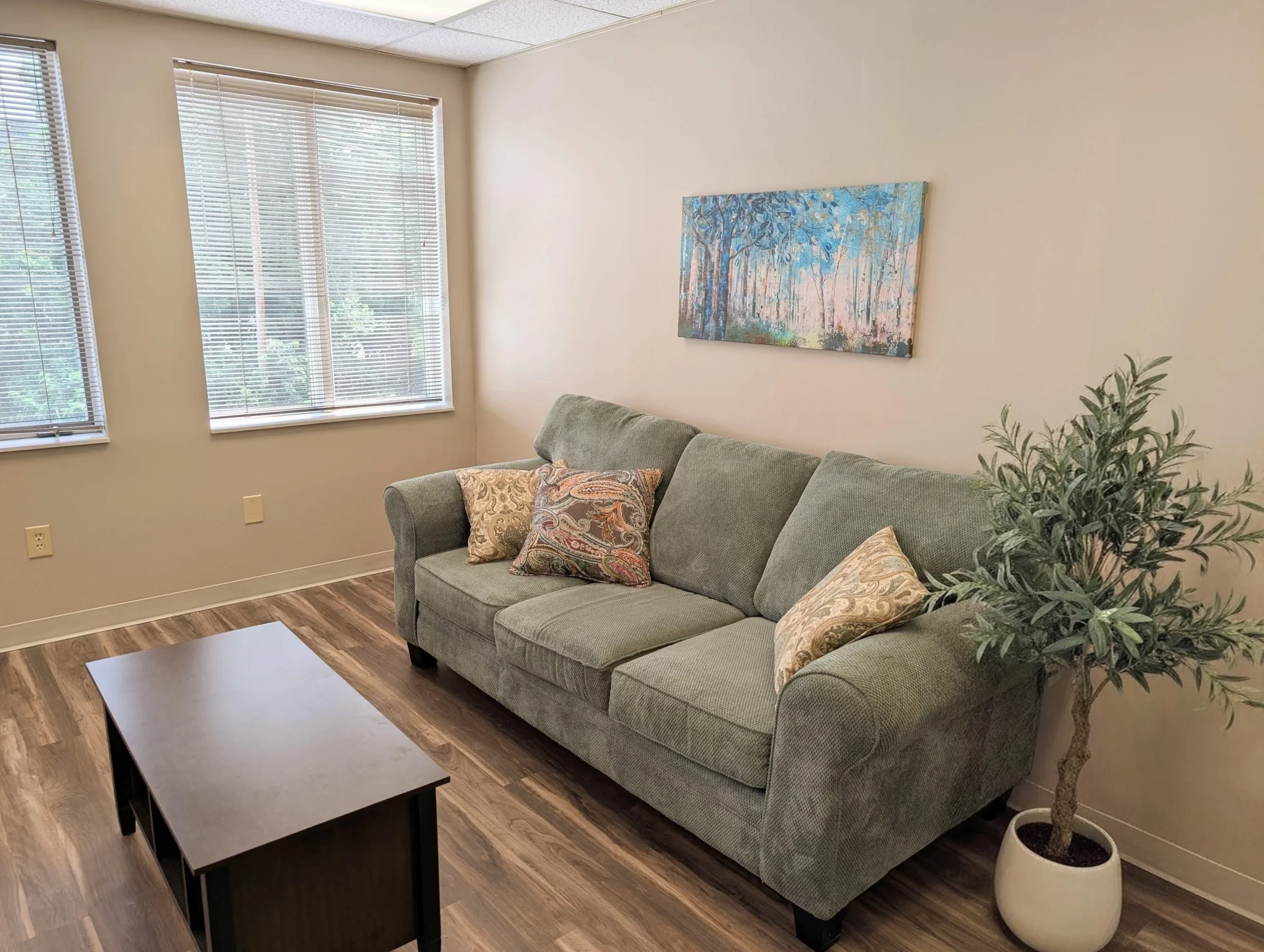
In-person Baltimore office
Our office is in the Mount Washington neighborhood at 1501 Sulgrave Ave., Suite 206, Baltimore, MD 21209, convenient to Pikesville, Owings Mills, and Towson.
(443) 296-2584
Virtual and hybrid therapy
We offer secure teletherapy anywhere in Maryland. We regularly work with clients outside Baltimore City and County, in places like Montgomery, Carroll, and Howard County, who often drive in for the first session and move to virtual visits from there.
Get started with therapy for health anxiety
Choose a convenient time for your consultation with an anxiety specialist. Book a free 15-minute consultation to talk through what you're experiencing and whether health anxiety therapy is the right fit.